
Introduction
Male hair loss is usually androgenetic alopecia – male pattern baldness. It affects roughly half of men by the age of fifty, and the knock to your confidence is real.
There are several routes: supplements, scalp care, natural remedies, and prescription medicines such as minoxidil or finasteride. They don't all rest on the same weight of evidence, and none of them suits everyone. This guide sets out what we know about each, so you can talk it through with a doctor.
The medicines named here are prescription-only. They are dispensed by a pharmacy against a prescription, after an individual medical assessment, and they carry side effects that need discussing before you start.
Supplements
Supplements deliver the nutrients a hair follicle needs to work properly. They are worth taking when a deficiency has been confirmed, and much less certain when it hasn't. Low iron or low zinc weakens the hair shaft and encourages shedding; correcting the shortfall usually helps. Without a deficiency, expect little.
Biotin and zinc
Biotin plays a part in how the body handles protein, fat and carbohydrate. Deficiency is rare in Western countries, but it does weaken hair and can trigger shedding. Supplementing corrects the deficiency. In someone who isn't deficient, the evidence shows no benefit.
Zinc helps regulate the sebaceous glands and repair tissue. A blood test will tell you whether supplementing makes sense.
Saw palmetto turns up in a lot of supplements. It inhibits 5-alpha-reductase in vitro, the enzyme that converts testosterone into DHT – the hormone behind androgenetic alopecia. Clinical evidence in men remains thin and low-quality: a lead worth following, not an established treatment.
Antioxidants and amino acids
Vitamins E and C limit the oxidative stress that weakens the follicle. Cysteine and methionine, both sulphur-containing amino acids, sit in the structure of keratin itself.
None of this replaces a balanced diet. It fills the gaps, when the diet is poor or a test shows a shortfall.
Prescription medication
Two molecules have real evidence behind them in male androgenetic alopecia: finasteride and minoxidil. Both are prescription-only.
Finasteride inhibits type 2 5-alpha-reductase and brings down DHT levels, the hormone responsible for the gradual miniaturisation of the follicle. Taken orally, one tablet a day, it slows shedding and thickens the hair you still have.
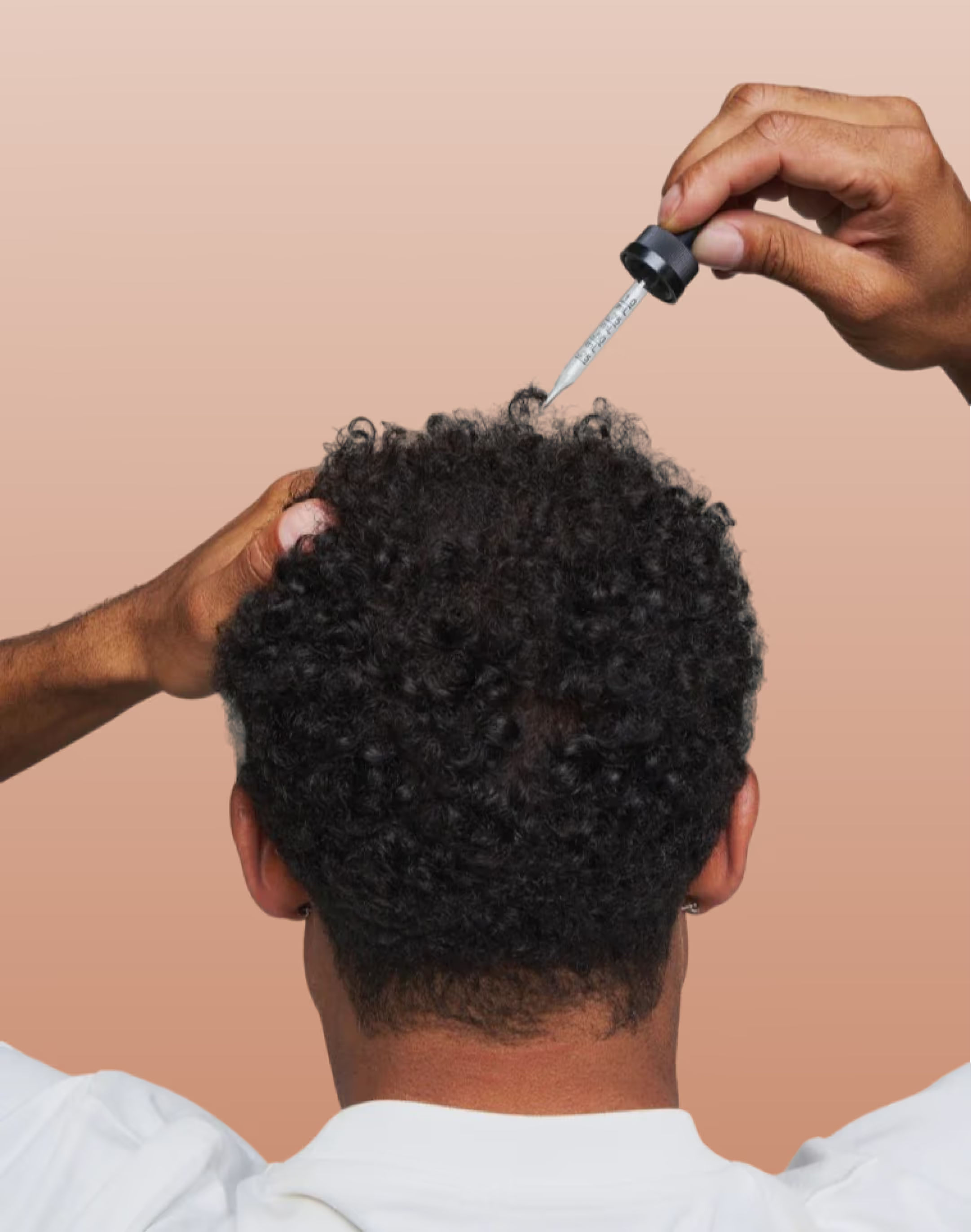
Minoxidil works differently. It opens potassium channels in the follicle cells and extends the growth phase, known as anagen. Applied to the scalp, usually twice daily, it increases density in the area treated.
How well they work, for how long, and at what cost
Both only work while you keep taking them. Stop, and the ground you gained is lost within a few months. The first visible results take three to six months.
Finasteride carries a risk of sexual side effects – reduced libido, erectile or ejaculatory problems – reported in a minority of patients and usually reversible on stopping. Mood changes have also been described. Topical minoxidil can cause irritation, itching and unwanted hair growth wherever it makes contact; taken orally, it carries cardiovascular effects that call for monitoring.
Neither is something to start on your own. A doctor weighs the benefit-risk balance against your situation, your medical history and what you expect.
Natural remedies
Aloe vera, castor oil, onion juice
Some people would rather start with something that isn't a drug. Aloe vera, castor oil and onion juice come up again and again. The evidence is weak, but they are well tolerated and cheap.
Aloe vera soothes and hydrates. It calms scalp irritation and helps clear the follicular openings – useful when seborrhoeic dermatitis is keeping inflammation going.
Castor oil is rich in ricinoleic acid and vitamin E. Used as a mask, often blended with a lighter oil such as coconut, it nourishes the hair shaft and softens it. It has no proven effect on density.
Onion juice is rich in sulphur compounds, which go into keratin. The only clinical study available, published by Sharquie and Al-Obaidi in 2002, looked at alopecia areata – an autoimmune condition, distinct from androgenetic alopecia – and reported regrowth in most participants. Nothing allows that result to be stretched to common baldness. The smell remains the main obstacle.
Essential oils
Essential oils are used to massage the scalp. The massage itself improves local circulation; the oil adds its own effect on top.
Peppermint, lavender, rosemary
Peppermint is a vasodilator: it increases blood flow to the scalp. Lavender is antimicrobial and helps rebalance sebum production, which can settle an irritated scalp.
Rosemary has the best evidence of the three. An Iranian trial published by Panahi in 2015 compared it with 2% minoxidil over six months in men with androgenetic alopecia. Both groups improved to a similar degree, with less itching in the rosemary arm. One trial, small numbers: encouraging, not proof of equivalence.
Never apply these oils neat. Dilute them in a carrier oil – coconut or jojoba – before they touch the scalp.
Vitamin D
Low vitamin D is associated with several kinds of hair loss, androgenetic alopecia and alopecia areata among them. The association is documented; which way it runs is less clear.
What it does in the hair cycle
The vitamin D receptor sits inside the hair follicle and takes part in triggering the growth phase. A deficiency disrupts that cycle. Vitamin D does not create new follicles – their number is fixed before birth – but it keeps the ones you have working properly.
Sunlight remains the main source. When there isn't enough of it, oily fish, eggs and fortified dairy contribute, and a supplement can be prescribed.
Test before you supplement
A blood test tells you where you stand. That is particularly worth doing at the end of winter, and for anyone who spends most of their time indoors. Correcting a confirmed deficiency helps; supplementing without one does not, and high doses over long periods carry a risk of toxicity.
Diet
A poor diet weakens the follicle. A decent one won't regrow hair, but it stops you adding a shedding factor to ground that is already working against you.
The nutrients that matter
Omega-3s from oily fish, walnuts and flaxseed keep the scalp in good condition. Iron carries oxygen to the follicle cells: iron deficiency is one of the commonest causes of diffuse shedding, particularly in women. You'll find it in red meat, pulses and dark green vegetables. Vitamin E, in nuts, seeds and vegetable oils, shields cells from oxidative stress.
In practice
Green vegetables, fresh fruit, lean protein, decent fats. Nothing dramatic. It's the base everything else builds on.
Which doctor to see
Once shedding settles in or picks up speed, a doctor's opinion identifies the cause before anything gets treated. Not all hair loss is androgenetic: iron deficiency, a thyroid disorder, telogen effluvium after a shock, or a scalp condition are all treated differently.
The medical options
A dermatologist examines the scalp, performs trichoscopy where needed and orders the relevant tests. Depending on the cause, treatment may involve topical minoxidil, oral finasteride, PRP injections – platelet-rich plasma – or, in advanced cases, a hair transplant.
Follow-up and adjustment
Regular follow-up shows what is working and lets you change what isn't. That is where most of it is decided: a treatment you stick with beats a stronger one you abandon after two months.
With Hairdex, you speak to a doctor trained in hair loss through a video consultation, and they issue your prescription if your situation calls for one.
Conclusion
There is no single answer to hair loss. Supplements correct deficiencies, natural remedies calm the scalp, medicines act on the hormonal mechanism. Most treatment plans pull on more than one of these.
The factor that weighs heaviest is neither the molecule nor the supplement. It's timing. The earlier you start, the more follicles there are left to protect.

Written by
Louis Damas29.08.2026