

What is oral finasteride?
Androgenetic alopecia (AGA), commonly called male pattern baldness, is the most widespread form of hair loss in men. It's a genetically determined condition, marked by the progressive conversion of terminal hairs (thick, pigmented, long) into intermediate hairs and then into vellus hairs (fine, short, poorly pigmented), under the combined influence of a genetic predisposition and circulating androgens (Shanshanwal & Dhurat, 2017).
For decades, the only medication available was topical minoxidil — a vasodilator whose mechanism of action on the hair follicles is still only partly understood. It targeted the symptoms, not the hormonal cause of the loss.
Finasteride marks a paradigm shift: it's the first oral drug to directly target the hormonal mechanism driving AGA. It belongs to the class of 5-alpha-reductase inhibitors (5-ARIs), a key enzyme in androgen metabolism.
Originally developed at 5 mg/day (Proscar®) to treat benign prostatic hyperplasia from 1992 onwards, finasteride was later studied at lower doses for AGA. In December 1997, the FDA approved finasteride 1 mg/day (Propecia®) as a treatment for male androgenetic alopecia — a decision based on a full programme of multicentre clinical trials (Roberts et al., 1999).
In France, finasteride 1 mg is available on prescription, both as a brand-name drug (Propecia®) and as a generic. It's reimbursed in some prostate hyperplasia cases (at 5 mg) but not in the AGA indication.
One important point: oral finasteride doesn't cure androgenetic alopecia. It controls the progression as long as the treatment continues. Once stopped, the hair follicles regain their DHT sensitivity and hair loss picks up again, usually within 6 to 12 months of discontinuation.
.avif)
Le finastéride est-il efficace ?
Téléchargez le dernier guide sur l'efficacité du Finastéride sur les hommes atteints d'alopécie andro-génétique.
What's the recommended dose?
The optimal finasteride dose for AGA wasn't set arbitrarily. It's based on two separate clinical studies run in parallel: a pilot study and a dose-ranging study, which together evaluated a wide range of doses from 0.01 mg to 5 mg per day (Roberts et al., 1999).
The pilot study
The first study (pilot) randomised 227 men aged 18 to 36 in a 12-month double-blind, placebo-controlled trial comparing finasteride 5 mg/day with placebo. It established the proof of concept: finasteride does increase hair count in men with AGA (Roberts et al., 1999).
The dose-ranging study
The second study randomised 466 men in a 6-month double-blind, placebo-controlled trial (with a 6-month extension), testing doses of 1 mg, 0.2 mg and 0.01 mg/day. The goal was to map the dose–response relationship below 5 mg (Roberts et al., 1999).
Results by dose:
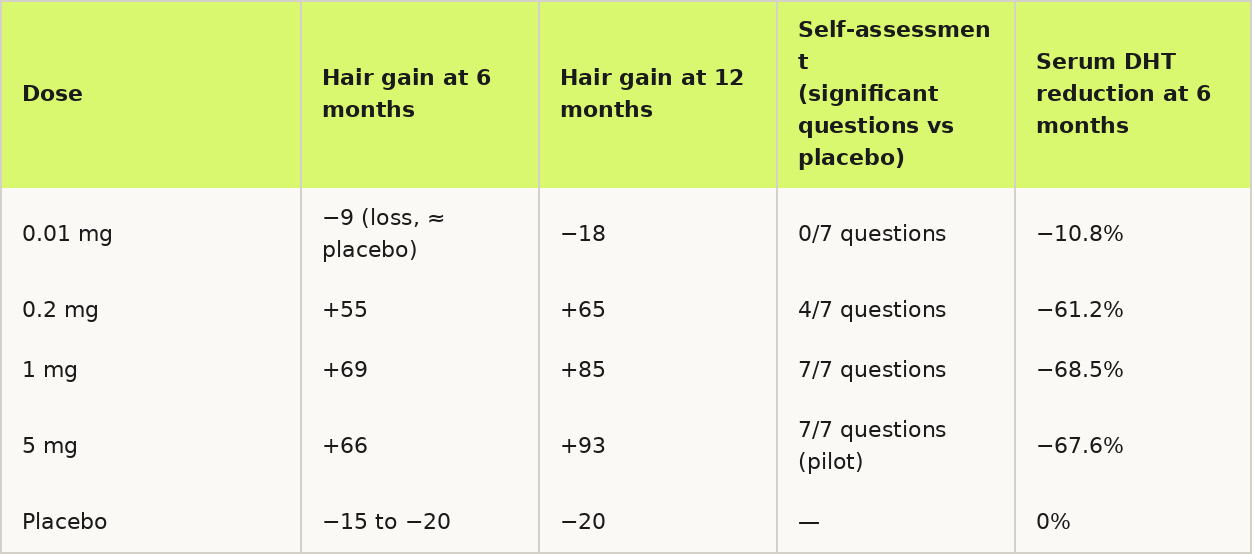
Several important lessons come out of this data (Roberts et al., 1999):
First, the 0.01 mg dose is clinically ineffective: its results match placebo, both on hair count and on subjective criteria.
Second, the 0.2 mg dose is active but stays below 1 mg: while it delivers a similar cut in serum DHT, it doesn't reach a significant improvement across all patient self-assessment criteria or on global photography at the 1 mg level.
Third — and this is the key point — the 1 mg and 5 mg doses give statistically equivalent results on every efficacy criterion. The net hair gain versus placebo is 84 hairs for 1 mg (69 − (−15)) and 86 hairs for 5 mg (66 − (−20)) — strikingly close figures. The reason is that DHT suppression is already near-maximal at 1 mg: moving up to 5 mg brings no meaningful extra reduction.
Dosing takeaway: 1 mg/day is the optimal dose. It offers the best balance between maximal efficacy and minimising systemic exposure. Dropping below 0.2 mg amounts to not treating at all; pushing up to 5 mg brings no additional hair benefit (Roberts et al., 1999).
Is oral finasteride effective?
Oral finasteride 1 mg has been assessed along several complementary axes across the different studies: objective hair counting (macrophotography), investigator assessment, patient self-assessment, and global photography read by a blinded panel of dermatology experts.
Efficacy on the vertex
The Roberts et al. (1999) study is the reference for vertex efficacy. It followed 693 men aged 18 to 36 with Hamilton–Norwood grade III vertex or IV AGA, split across the two studies (pilot and dose-ranging).
Hair count:
At 6 months, the finasteride 1 mg group gains on average 69 hairs in a 2.54 cm-diameter circular area (about 5.1 cm²) on the vertex, while the placebo group loses 15. That's a clear 84-hair net gap in favour of finasteride. At 12 months, the gain reaches 85 hairs in the finasteride group against a loss of 20 in the placebo group (Roberts et al., 1999).
Investigator assessment:

The share of patients rated as improved by the investigator climbs from 75% at 6 months to 91% at 12 months in the finasteride group — an effect that strengthens over time. In the placebo group, the rate instead drops from 51% to 46%, showing the natural progression of the condition without treatment (Roberts et al., 1999).
Global photography

Blinded review of global photographs confirms the objective data: at 12 months, 54% of finasteride patients are rated as improved compared with only 3% in the placebo group (Roberts et al., 1999).
Efficacy on the frontal area
The frontal area (the anterior and mid-scalp) is often the first visible zone and the one patients worry about most. The Leyden et al. (1999) study specifically assessed this area in 326 men aged 18 to 40 with mild-to-moderate frontal loss, with or without vertex involvement.
Hair count
At 12 months, the mean hair count in a 1 cm² circular area rises by 9.6 hairs in the finasteride group and falls by 2.0 hairs in the placebo group — a net 11.6-hair gap (p < 0.001). The improvement is visible from 6 months and holds up at 24 months in patients who continued treatment in the open extension (Leyden et al., 1999).
This gain may look modest next to the vertex data, but it comes down to method: frontal counts are taken in zones of active thinning where density is still relatively preserved (215 hairs/cm² on average), whereas vertex counts are taken at the edge of the bald patch, where density is already very low. In absolute terms, the frontal gain is less dramatic — but clinically just as meaningful.
Detailed results at 12 months
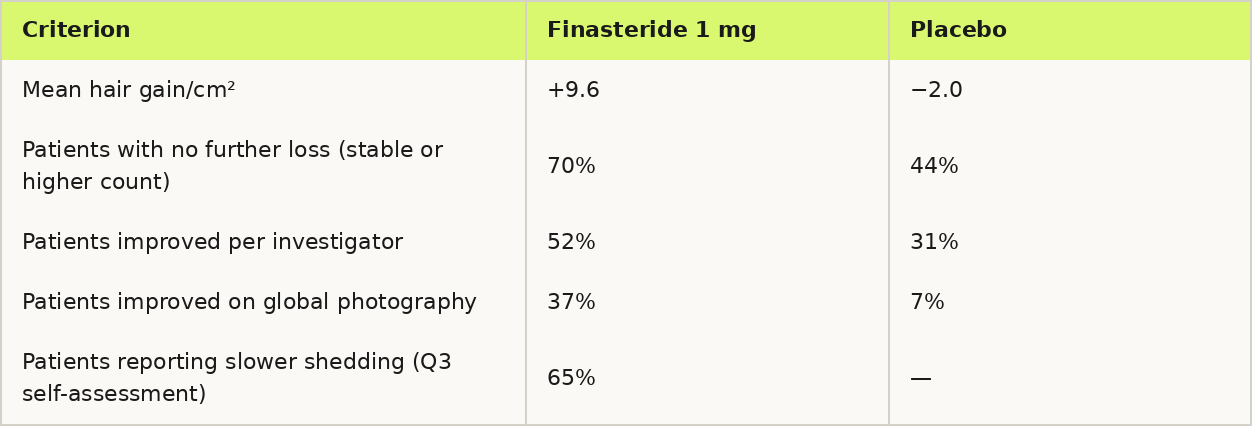
At 12 months, 70% of patients on finasteride had no further frontal loss, against 44% of placebo patients who kept losing hair (Leyden et al., 1999).
Patient self-assessment adds a useful angle: as early as month 3, finasteride patients report a significant improvement in overall hair appearance and in the slowing of shedding.
Oral finasteride vs 5% topical minoxidil
The randomised comparative study by Arca et al. (2004) is one of the few that put the two main male AGA treatments head-to-head over a year. It enrolled 65 men aged 18 to 50, with mild-to-severe AGA graded II to V on the modified Hamilton–Norwood scale, split into two groups: 40 patients on oral finasteride 1 mg/day and 25 on 5% topical minoxidil twice a day.
Clinical results at 12 months:
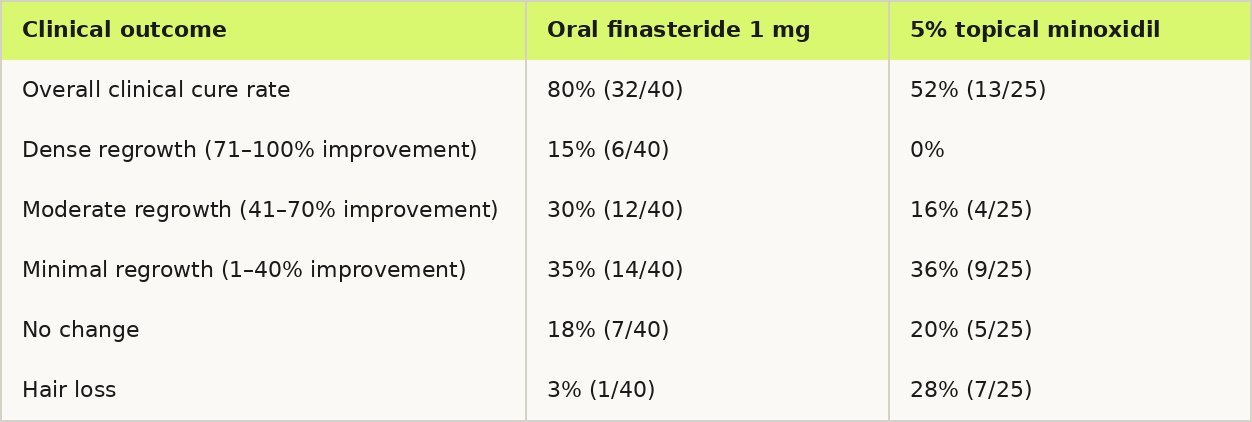
The difference between the two groups is statistically significant (p < 0.05).
A few points stand out (Arca et al., 2004): finasteride produces dense regrowth in 15% of patients, something not seen in the minoxidil group. Minoxidil, meanwhile, is linked to continued hair loss in 28% of patients — against only 3% for finasteride — showing that minoxidil is less effective at halting progression.
The biological data also confirm the different mechanisms of the two molecules: on finasteride, total testosterone rises slightly while free testosterone and PSA fall, in line with enzyme inhibition. On minoxidil, no hormonal change is seen, consistent with its non-hormonal mechanism (Arca et al., 2004).
Oral or topical finasteride?
The oral-vs-topical finasteride question is relatively recent. The topical formulation was developed with a clear aim: keep finasteride's hair efficacy while sharply cutting systemic exposure — and therefore the potential side effects tied to reducing DHT throughout the body.
The reference study on this is the randomised, double-blind, double-dummy phase III trial by Piraccini et al. (2022), run over 24 weeks in 45 centres across Europe in 458 men with Hamilton–Norwood III vertex to V AGA.
Study protocol
Patients were split into three groups in a 2:2:1 ratio:
- Topical finasteride 0.25% spray (1 to 4 sprays per day depending on the extent of baldness) + oral placebo
- Topical placebo + oral placebo
- Topical placebo + oral finasteride 1 mg (Propecia®)
This double-blind, double-dummy design is particularly robust: neither the patients nor the investigators knew which active treatment was being given, ruling out perception bias.
Hair efficacy results at 24 weeks:
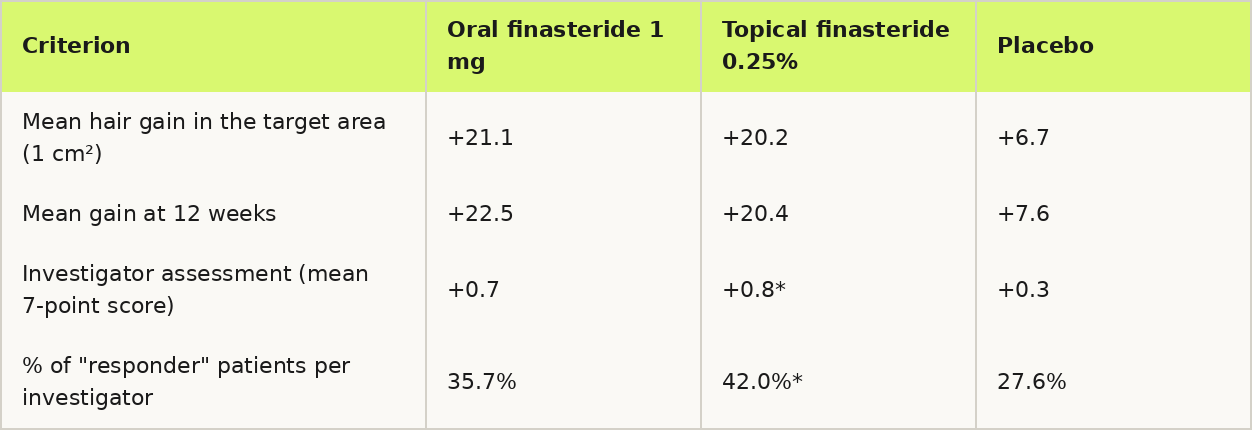
* p < 0.001 vs placebo (Piraccini et al., 2022).
Both active formulations produce numerically similar results on hair gain — and both are statistically superior to placebo. The difference between the two active formulations isn't statistically significant.
Systemic exposure and DHT impact: a major difference
This is where the real distinction between the two formulations sits. Hair efficacy is comparable, but systemic finasteride exposure is radically different (Piraccini et al., 2022):
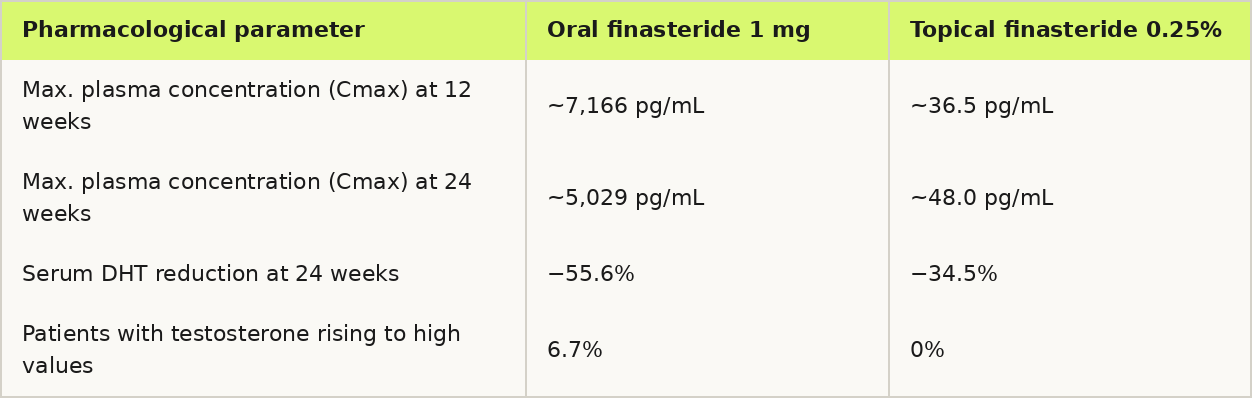
Peak plasma finasteride concentrations are more than 100 times lower with the topical formulation. That translates into a shallower serum DHT reduction (34.5% vs 55.6%), which explains why the systemic effect, and therefore the potential sexual side effects, are reduced with the topical form.
Side effects by formulation
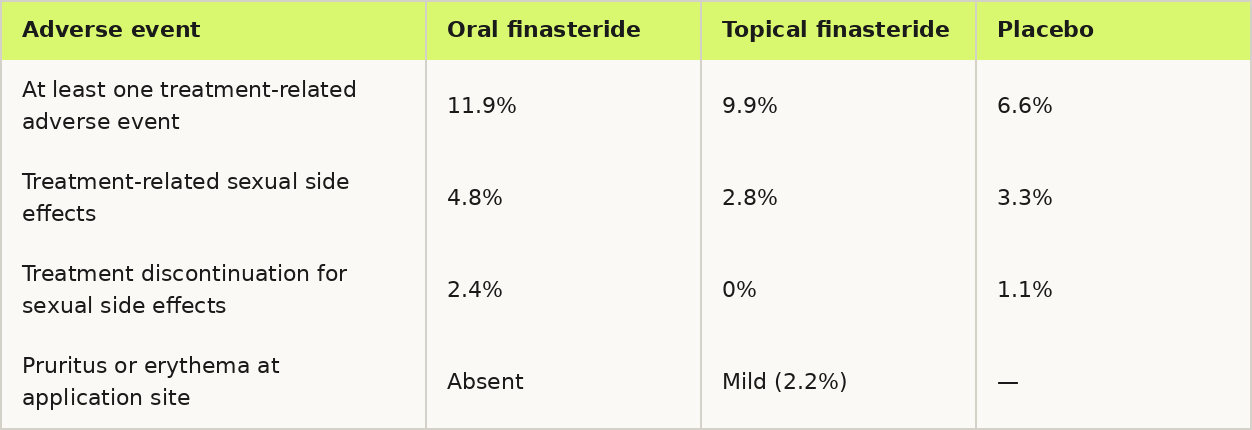
The trend towards fewer sexual side effects with the topical form (2.8% vs 4.8%) fits the lower systemic exposure, even if the difference doesn't reach statistical significance in this trial (Piraccini et al., 2022).
How to choose between the two formulations?
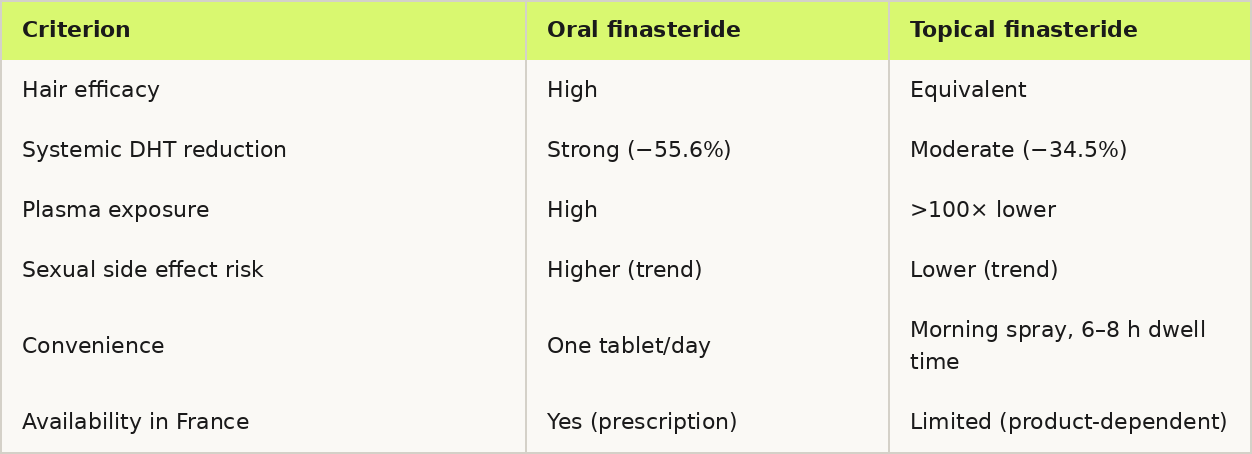
The choice between oral and topical finasteride doesn't come down to efficacy — they're equivalent there — but to a trade-off between tolerability profile, convenience and personal preferences:
Side effects of oral finasteride
Side effects are probably the topic that weighs on patients most when considering oral finasteride. It's important to separate what the randomised controlled trials show — the most reliable data — from real-world observations, which sometimes surface rarer but more severe cases.
Sexual side effects in clinical trials
In randomised placebo-controlled trials, finasteride's side effects are mostly sexual in nature. Their overall frequency is low and, in most cases, reversible on stopping treatment.
Roberts et al. (1999) data — pilot and dose-ranging studies
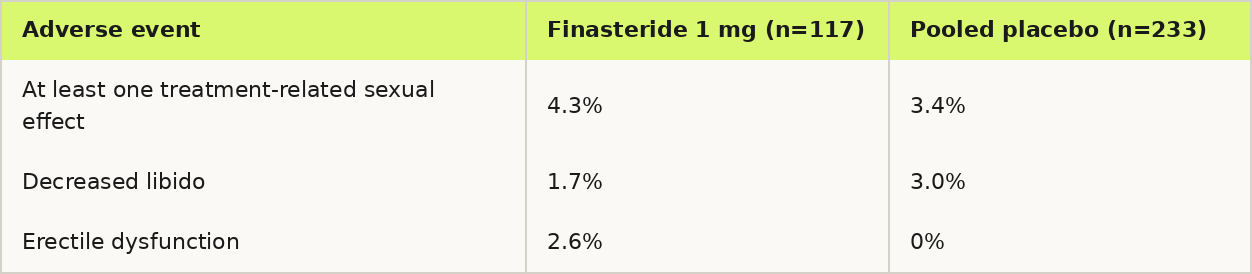
Worth flagging: in this study, the rate of decreased libido is numerically higher in the placebo group (3.0%) than in the finasteride group (1.7%). That illustrates the nocebo phenomenon — the anxiety of taking a drug can itself induce sexual side effects, regardless of any real pharmacological action (Shanshanwal & Dhurat, 2017).
Piraccini et al. (2022) data — oral vs topical comparison:

Arca et al. (2004) data — comparison vs minoxidil:
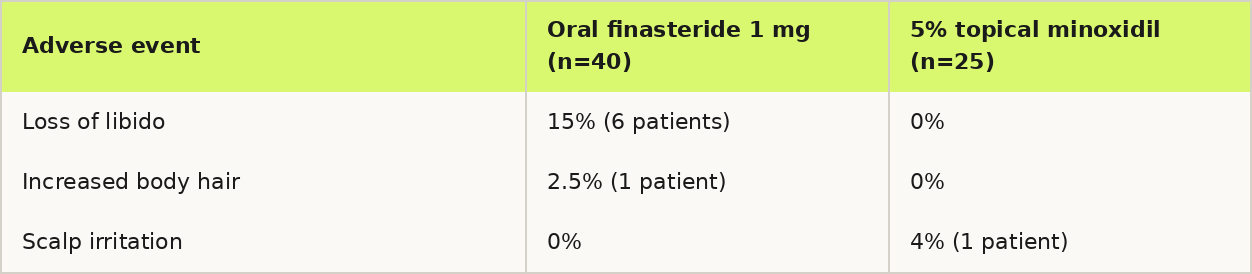
The 15% rate Arca et al. observed is higher than in other studies, probably because of how the data were collected (direct questionnaire at each visit) — a method that tends to pick up mild effects more reliably than studies that leave patients to spontaneously report their side effects. All these effects went away on stopping treatment (Arca et al., 2004).
Shanshanwal & Dhurat (2017) data — finasteride vs dutasteride comparison:

The two molecules show comparable sexual side effect profiles, with no statistically significant difference between them (Shanshanwal & Dhurat, 2017).
Persistence of side effects after stopping treatment
One important point that doesn't come directly from the trials cited, but that has been the subject of ongoing debate in the medical literature: cases of sexual dysfunction persisting after treatment discontinuation have been reported in real-world practice under the term Post-Finasteride Syndrome (PFS). The phenomenon remains controversial in terms of its true prevalence and mechanisms, but it justifies clear information for patients before any initiation. Finasteride must always be prescribed and monitored by a doctor.
Impact on other biological parameters
Clinical trials have systematically measured finasteride's impact on a range of biological parameters. The results are reassuring:
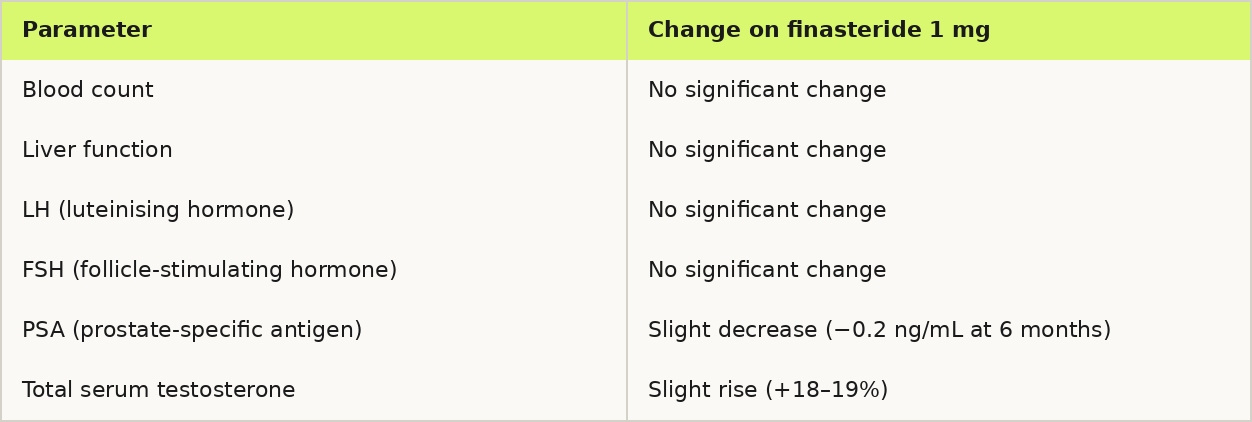
The PSA drop under finasteride is well known and documented: it can mask an elevated PSA value during prostate cancer screening. Doctors need to factor it into how they read the results (Roberts et al., 1999).
Am I a good candidate for oral finasteride?
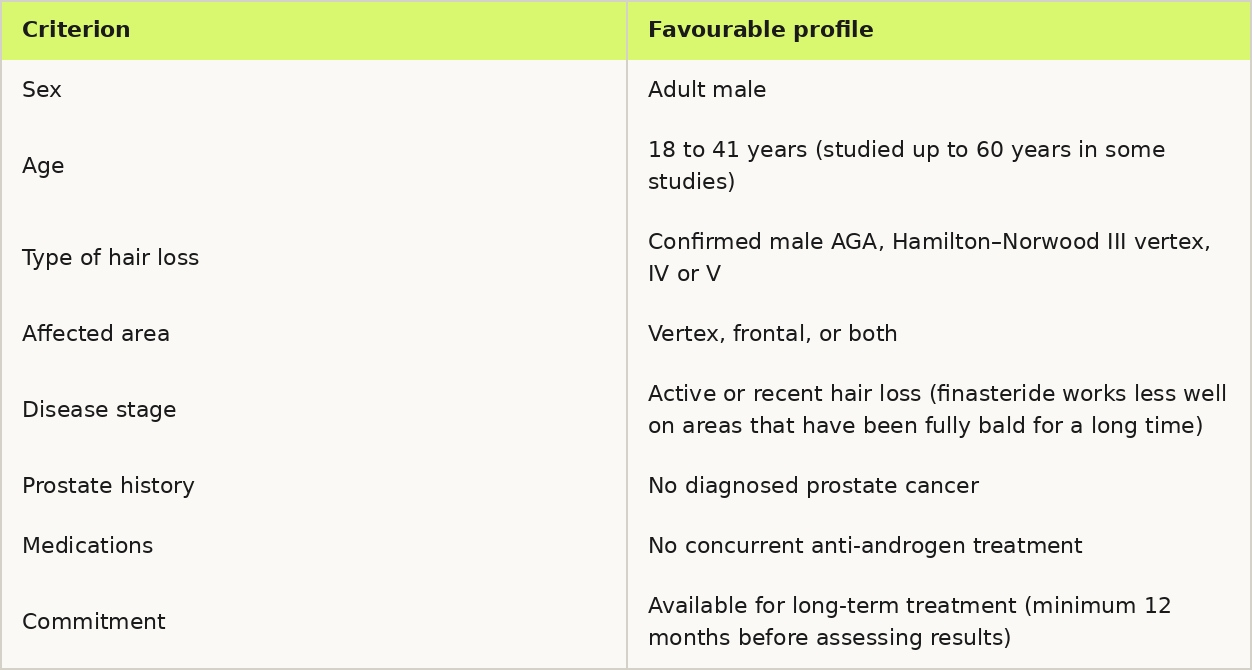
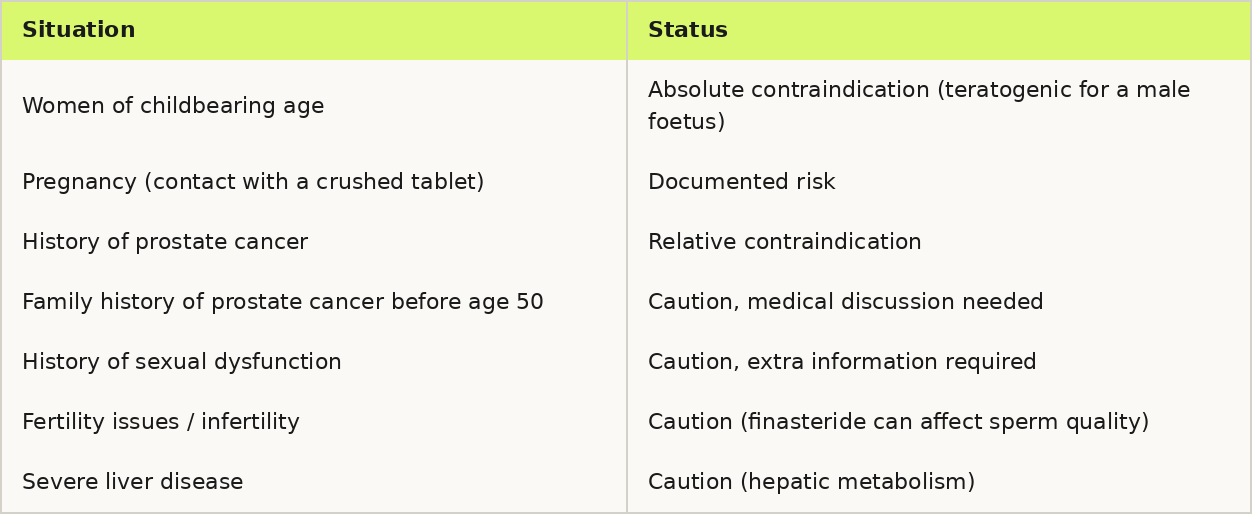
Oral finasteride is an effective treatment, but it isn't a fit for every profile. Whether someone's a good candidate depends on a set of clinical, biological and personal criteria.
Ideal candidate profile
Contraindications and precautions
Genetic and ethnic variables
A less well-known but clinically relevant point: finasteride results can vary across populations because of genetic polymorphisms in the SRD5A2 gene, which codes for type II 5-alpha-reductase.
In their study, Shanshanwal & Dhurat (2017) observed that finasteride response was weaker in their Indian population than in the data published in other ethnic groups. They attribute this partly to the V89L polymorphism (valine-to-leucine substitution at position 89), which reduces 5-AR enzyme activity and therefore the effect of finasteride.
Age and stage of hair loss
Finasteride works best on areas going through active miniaturisation, where the hair follicles are still alive but shrinking. On areas that have been fully bald for several years, the follicles may be permanently atrophied and no longer respond to treatment.
Studies also show that efficacy tends to be slightly better in younger patients, whose AGA is at an earlier stage and whose follicles are in better shape. That's one more reason not to delay starting treatment.
Conclusion
More than 25 years after its approval, oral finasteride remains the reference treatment for male androgenetic alopecia. Its efficacy is solidly documented: clear hair gain on the vertex (+85 hairs at 12 months vs −20 for placebo, Roberts et al., 1999) and on the frontal area (+9.6 hairs/cm² vs −2.0 for placebo, Leyden et al., 1999), with an effect that strengthens over time and holds as long as treatment continues.
Its tolerability profile in clinical trials is broadly favourable: sexual side effects affect a minority of patients (4–5% vs 3% on placebo) and are reversible on stopping in the vast majority of cases. The possibility of a Post-Finasteride Syndrome — controversial but reported in real-world practice — nevertheless calls for rigorous medical follow-up and clear information for patients.
The development of the topical formulation (Piraccini et al., 2022) now offers an alternative for patients keen to limit systemic exposure, with equivalent hair efficacy and plasma exposure more than 100 times lower. Choosing between the two formulations comes down to a trade-off between convenience (daily tablet vs topical application with dwell time) and systemic tolerability profile.
References
- Roberts JL et al. (1999). Clinical dose ranging studies with finasteride, a type 2 5α-reductase inhibitor, in men with male pattern hair loss. J Am Acad Dermatol, 41:555–63.
- Leyden J et al. (1999). Finasteride in the treatment of men with frontal male pattern hair loss. J Am Acad Dermatol, 40:930–7.
- Arca E et al. (2004). An open, randomized, comparative study of oral finasteride and 5% topical minoxidil in male androgenetic alopecia. Dermatology, 209:117–125.
- Shanshanwal SJS & Dhurat RS. (2017). Superiority of dutasteride over finasteride in hair regrowth and reversal of miniaturization in men with androgenetic alopecia. Indian J Dermatol Venereol Leprol, 83:47–54.
- Piraccini BM et al. (2022). Efficacy and safety of topical finasteride spray solution for male androgenetic alopecia: a phase III, randomized, controlled clinical trial. JEADV, 36:286–294.
How does oral finasteride work?
To understand how finasteride works, you first need to understand the central role DHT plays in androgenetic alopecia.
The role of DHT
Dihydrotestosterone (DHT) is an androgen derived from testosterone. It is produced locally in peripheral tissues — including the hair follicles — through the action of an enzyme: 5-alpha-reductase (5-AR). DHT binds to the androgen receptors in the cells of the hair follicles, and it is this binding that, in genetically predisposed individuals, triggers the miniaturisation process.
The evidence for DHT's central role comes from a natural observation: men with a genetic deficiency in type II 5-alpha-reductase have very low circulating DHT levels despite normal or high testosterone — and they don't develop androgenetic alopecia or prostatic disease (Roberts et al., 1999). That observation directly inspired the development of finasteride.
The three 5-AR isoenzymes
There are three 5-alpha-reductase isoenzymes, each with a specific tissue distribution (Shanshanwal & Dhurat, 2017):
Finasteride selectively and competitively inhibits the type II isoenzyme. By blocking this enzyme in the hair follicles, it cuts the local conversion of testosterone into DHT, lowering DHT concentrations both in the scalp and in general circulation (Roberts et al., 1999).
Mechanistic limits of finasteride vs dutasteride
This selectivity for type II is both a strength and a limit. Since both type I and type II isoenzymes are present in the hair follicles, inhibiting only type II doesn't fully suppress local DHT production. That's one reason dutasteride — which blocks types I and II at the same time — shows superior efficacy in head-to-head studies (Shanshanwal & Dhurat, 2017). We'll come back to this in the efficacy section.
Impact on hormones
Reducing testosterone → DHT conversion mechanically comes with a small rise in serum testosterone (roughly +18–19% at 6 months), because the testosterone no longer converted to DHT builds up in circulation. This modest bump doesn't come with meaningful changes in LH or FSH, which shows that finasteride doesn't affect the hypothalamic–pituitary–gonadal axis (Roberts et al., 1999).
Finasteride also slightly lowers PSA (prostate-specific antigen), which needs to be factored in if prostate cancer screening is on the table: PSA values on finasteride have to be read with this effect in mind (Roberts et al., 1999).
Summary: