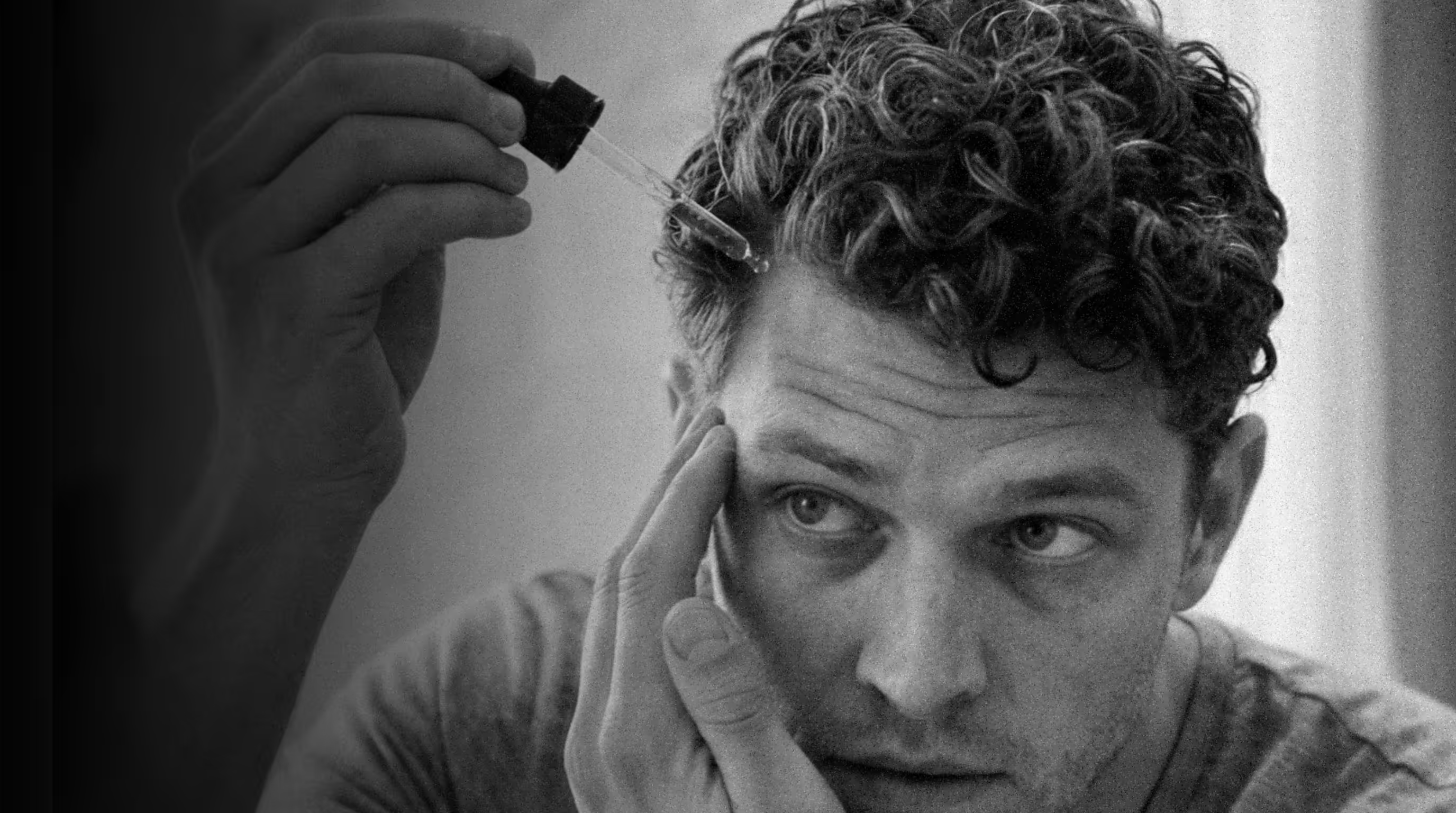


The article in 30 seconds :
• Topical tretinoin is off-label for hair loss in Europe.
• It boosts minoxidil penetration and may reactivate SULT1A1 enzyme, aiding minoxidil's effect.
• The Shin 2007 trial showed combination results comparable to minoxidil alone, not superior.
• Best for minoxidil non-responders, but use with caution due to irritation, pregnancy, photosensitivity.
Tretinoin for Hair Loss: What the Science Really Says in 2026
Tretinoin, a derivative of vitamin A better known for treating acne and sun-damaged skin, has quietly become one of the most discussed add-on treatments (adjuncts) in the hair loss community. Online forums and social media often present it as a booster that can rescue people who do not respond to minoxidil, the reference topical treatment for pattern hair loss. But what does the scientific evidence actually show when we read the clinical trials, and what should a well-informed European patient know before considering it?
This article offers an independent, evidence-based review of topical tretinoin for hair loss, written for a general European audience. We will cover the mechanisms of action, key clinical data, specific scenarios where it may help, real safety concerns, and practical realities of using an off-label molecule on the scalp.
What is Tretinoin and Why is it Being Used on the Scalp?
Tretinoin, also called all-trans retinoic acid (ATRA), is the active form of vitamin A that the body can directly use. In skin cells, it binds to nuclear receptors (RAR-alpha, RAR-beta, and RAR-gamma, which act as molecular switches that control gene expression) to regulate how cells grow, mature, and shed. For decades, it has been used to treat common acne and skin aging caused by sun exposure (photoageing), which remain its only officially authorised uses in Europe.
Hair loss is not among its approved indications. In the European Union, topical tretinoin is a prescription-only medication, and marketing authorisations granted by national regulators (coordinated by the European Medicines Agency, EMA) cover only acne and certain signs of sun damage. The EMA enforces strict safety measures for all retinoid medications, especially regarding pregnancy prevention due to the risk of birth defects. Using tretinoin on the scalp for hair loss is therefore strictly off-label throughout Europe: a doctor may choose to prescribe it, but the patient must be informed that it is not officially approved for hair loss.
Why the Interest in Tretinoin for Hair Loss?
The scientific rationale is not that tretinoin stimulates hair growth on its own. Instead, interest stems almost entirely from how it interacts with minoxidil, the reference topical treatment for androgenetic alopecia (common genetic hair loss).
How Tretinoin May Work on Hair Follicles: Two Distinct Mechanisms
Two separate biological pathways explain how tretinoin might enhance hair loss treatments, particularly minoxidil. Understanding both mechanisms is essential, as they lead to very different practical and clinical outcomes.
Mechanism 1: Breaking Down the Skin Barrier (Better Penetration)
The outermost protective layer of the scalp, known as the stratum corneum, acts as a protective shield against external substances. Tretinoin softens this barrier by modifying how skin cells bind together and shed, allowing topical treatments to pass through more easily. A classic pharmacokinetic study (which measures how the body absorbs medications) demonstrated that applying 0.05% tretinoin before 2% minoxidil increased the absorption of minoxidil into the bloodstream by about 2.7 to 3-fold compared to minoxidil alone.
While higher penetration means more active treatment reaches the hair follicle, it is a double-edged sword. Increased absorption also brings a higher risk of local skin irritation and greater systemic exposure (entry of minoxidil into the bloodstream), which is an important safety consideration for individuals with cardiovascular risk factors.
Mechanism 2: Reactivating the SULT1A1 Enzyme
Minoxidil is an inactive precursor (a prodrug), meaning it has no effect on hair follicles in its original state. To become active, it must be converted into minoxidil sulfate by a specific enzyme called sulfotransferase 1A1 (SULT1A1), located in the outer root sheath of hair follicles. Individuals with low SULT1A1 activity cannot process enough minoxidil into its active form, which explains why up to half of patients do not respond to standard topical minoxidil. Testing for this enzyme's activity can predict patient response with a sensitivity of 93 to 100%.
In 2019, Sharma and colleagues published an important clinical study in Dermatologic Therapy. In this trial, 20 adults with androgenetic alopecia applied 0.1% tretinoin once daily to a target scalp area for five days. While average enzyme levels across the whole group remained unchanged, 3 out of 7 participants (43%) who were initially predicted non-responders successfully crossed into the responder category after just five days. In plain language, tretinoin appears capable of boosting or "waking up" the SULT1A1 enzyme in certain individuals whose hair follicles previously lacked the capacity to activate minoxidil.
A 2025 review in Annals of Medicine and Surgery reaffirmed both pathways, placing SULT1A1 upregulation (increased enzyme production) at the center of the modern rationale for combination therapy. Laboratory work by Kwon and colleagues (2007) on cultured human cells also demonstrated that combining minoxidil with tretinoin enhanced hair growth synergistically by activating cellular survival pathways (Erk and Akt) and preventing premature cell death (apoptosis) in the dermal papilla, the command center of the hair follicle.
The Key Clinical Trial: Shin et al. 2007
The primary randomized controlled trial cited by clinicians was published in the Journal of Korean Medical Science in 2007 by Shin and colleagues. It remains the key human clinical study on this topic, despite its modest size. The study evaluated 31 men with male-pattern hair loss (Norwood scale III to V, aged 28 to 45), with 29 completing the 18-week trial. Group A applied 5% minoxidil plus 0.01% tretinoin once daily at night, while Group B applied 5% minoxidil twice daily. The study found no statistically significant difference between the two groups in total hair count, thick terminal hair count, anagen ratio (the percentage of hair in the active growth phase), growth rate, or shaft diameter.
The conclusions of this trial are frequently misinterpreted on online forums. Shin and colleagues did not demonstrate that tretinoin increases maximum hair regrowth compared to standard minoxidil. Rather, they showed that applying a combination formula once daily achieved results comparable to applying minoxidil twice daily. This represents a potential convenience benefit that can improve patient compliance, rather than proof of superior efficacy. In medical statistics, this is considered a non-inferiority finding, not a demonstration of superiority.
Study limitations are substantial: only 29 participants completed the trial, there was no placebo group, the follow-up period lasted only 18 weeks, and the population was exclusively male. To date, no equivalent clinical trial has been published in women suffering from female-pattern hair loss.
What the Updated 2025 to 2026 Reviews Conclude
Comprehensive medical reviews published recently have revisited this treatment strategy. The most recent review, published in Skin Appendage Disorders in 2026 by Maas and colleagues, provides clear guidance: current scientific evidence does not justify using dual therapy as a first-line treatment, but topical tretinoin may be considered an add-on option for androgenetic alopecia, particularly for patients who have failed to respond to minoxidil alone. The authors emphasize that any potential gain must be weighed against a higher risk of scalp irritation.
A 2025 review in the Journal of Clinical Medicine confirms that while preliminary trials show potential benefits, large-scale, placebo-controlled clinical trials with standardized measurements are required before official guidelines can endorse tretinoin for hair loss. The official European S3 Guideline for Androgenetic Alopecia (Blume-Peytavi et al., 2018) references the available literature but does not recommend tretinoin as a routine clinical treatment.
Who Might Benefit? A Stratified Clinical View
Rather than offering a uniform recommendation, the scientific evidence points toward specific clinical profiles where tretinoin combination therapy may or may not be appropriate.
| Clinical Profile | Rationale & Mechanism | Clinical Recommendation | Evidence Level |
|---|---|---|---|
| Confirmed Minoxidil Non-Responders | Potential SULT1A1 enzyme reactivation after 6+ months of non-response. | Rational candidate for off-label adjunct therapy. | Weak / Coherent |
| Early AGA (Treatment-Naive) | Minoxidil monotherapy is effective and better tolerated initially. | Not justified as first-line treatment; stick to monotherapy. | Unjustified |
| Once-Daily Regimen Seekers | Combination once daily non-inferior to minoxidil twice daily (Shin 2007). | Acceptable option to improve daily patient compliance. | Moderate |
| Women with Female-Pattern Hair Loss | Lack of female trials; high risk from retinoid teratogenicity. | Strict pregnancy prevention required; limited evidence. | Very Low |
| Non-Androgenetic Alopecia | Different underlying disease pathophysiology (areata, TE, scarring). | Not supported; use cause-specific targeted treatments. | Not Supported |
| Sensitive Scalp / Dermatitis | Disruption of stratum corneum increases flare-up and irritation risks. | Avoid or use with extreme caution to prevent skin barrier damage. | High Risk |
Sex-Specific Considerations
Most clinical studies evaluating tretinoin for hair loss have focused on male participants. Women facing female-pattern hair loss present distinct physiological considerations, with two factors requiring special care. First, safety regarding pregnancy: retinoids as a drug class carry strict pregnancy warnings due to teratogenicity (the risk of causing birth defects). Although absorption through intact scalp skin is low (around 1 to 2%), European Medicines Agency rules require strict pregnancy prevention for all retinoid treatments, meaning women of childbearing potential must discuss effective contraception with their prescribing doctor. Second, hormonal interactions: variations in oestrogen levels across the menstrual cycle and menopause may influence how hair follicle receptors process retinoid signals, though detailed clinical studies in women remain scarce.
Formulation Matters: Cream, Gel or Compounded Solution?
An often overlooked factor in treatment success is the vehicle (the carrier substance, such as a cream, gel, or liquid solution) in which tretinoin is dissolved. The active molecule behaves differently depending on the underlying formulation base.
| Formulation Vehicle | Penetration Level | Scalp Tolerability & Characteristics |
|---|---|---|
| Cream (Emollient Base) | Moderate | Generally better tolerated with less drying, but can leave a greasy feeling on hair. |
| Gel (Alcohol Base) | High | Easier to spread across scalp, but significantly more drying and prone to local irritation. |
| Compounded Hydroalcoholic Solution | Variable (pH dependent) | Combines tretinoin and minoxidil; higher risk of irritation from combined alcohol and propylene glycol. Prepared on medical prescription. |
Across Europe, specialized compounding pharmacies can prepare custom liquid formulations combining tretinoin and minoxidil under medical prescription. Compounding regulations vary by country (known as preparations magistrales in France, Rezepturen in Germany, or formule magistrali in Italy). The compounding pharmacist must carefully maintain chemical stability (since tretinoin rapidly degrades when exposed to light and oxygen) and ensure a balanced pH, as improper preparation can cause the active ingredients to break down rapidly.
Safety, Tolerability and the Shedding Question
Local Adverse Effects
The most common side effects on the scalp include erythema (skin redness), burning sensations, dryness, scaling, peeling, and itching (pruritus). In the 2007 trial by Shin, local irritation occurred in 5 out of 15 patients using the combination treatment compared to 4 out of 14 using minoxidil alone. Folliculitis (bacterial or non-infectious inflammation of the hair follicles) was noted in 2 patients. While these side effects are typically mild to moderate and temporary, they can cause sufficient discomfort to require stopping treatment.
Photosensitivity
Tretinoin thins the outer layer of skin and increases sensitivity to ultraviolet (UV) sunlight, making the scalp significantly more prone to sunburn. Anyone with thinning hair using topical retinoids should protect exposed scalp areas with a hat or broad-spectrum sunscreen. If the scalp becomes sunburned or acutely inflamed, tretinoin application should be paused immediately until the skin fully heals.
Systemic Minoxidil Exposure
Because tretinoin increases systemic minoxidil absorption approximately threefold, the overall safety profile differs from using topical minoxidil alone. Higher levels of minoxidil in the bloodstream can occasionally cause systemic side effects such as mild changes in blood pressure or heart rate. Patients with pre-existing cardiovascular conditions, low blood pressure (hypotension), or fluid retention should discuss these risks thoroughly with their physician.
Shedding: What Does it Really Mean?
A temporary increase in hair shedding during the initial weeks of treatment is a common concern. It is essential to distinguish between two separate hair shedding mechanisms. The first is anagen-shift shedding (a temporary resetting of the hair cycle), which occurs when dormant resting follicles (telogen) are activated into the growth phase (anagen). To begin growing a new hair strand, the follicle must first shed the old one. This expected shedding typically starts within 2 to 8 weeks and resolves by week 16, representing a positive sign that hair follicles are responding to treatment. The second is retinoid-induced hair loss, which involves direct hair shaft shedding caused by retinoid toxicity. True retinoid-induced effluvium is rare with low-dose topical tretinoin and is primarily observed with high-dose oral retinoid medications (such as isotretinoin or acitretin).
A practical clinical guideline: if hair shedding persists beyond 4 to 5 months, worsens continuously, or is accompanied by severe inflammation and discomfort, patients should consult a dermatologist to adjust or discontinue the treatment protocol.
Scalp Microbiome and Barrier
Long-term application of tretinoin alters the stratum corneum and can influence sebum (skin oil) production, as well as the scalp microbiome (the beneficial microorganisms residing on the skin). Individuals with pre-existing seborrhoeic dermatitis, chronic dandruff, or sensitive skin face a higher risk of irritation. Supporting the scalp barrier with gentle, sulfate-free shampoos, periodic use of targeted antifungal washes (such as ketoconazole 2%), and avoiding aggressive hair styling products can help maintain skin tolerance.
What About Oral Tretinoin, Retinol or Other Retinoids?
Oral tretinoin is a potent prescription drug strictly reserved for treating a specific type of blood cancer (acute promyelocytic leukaemia). It is never used for hair loss due to its severe systemic side effects. On the other hand, over-the-counter cosmetic retinol is roughly 10 to 20 times weaker than tretinoin, as the skin must convert it through multiple enzymatic steps into retinoic acid. There is currently no solid clinical evidence demonstrating that cosmetic retinol formulations produce meaningful hair growth on the scalp.
Realistic Expectations and Honest Limitations
A transparent review of the scientific literature reveals clear limits. The total body of clinical human evidence for topical tretinoin in androgenetic alopecia consists of one small randomized controlled trial (29 men completing 18 weeks), one brief enzyme study (20 participants over 5 days), preliminary laboratory studies on isolated cells, and narrative reviews analyzing these same original sources.
There are no large-scale, long-term, placebo-controlled clinical trials, nor are there dedicated studies in women. Furthermore, no direct comparative trials exist against established or emerging treatments like low-level laser therapy, scalp microneedling, platelet-rich plasma (PRP) therapy, or low-dose oral minoxidil. Patients considering off-label tretinoin should understand that while the treatment has a logical biological mechanism, high-grade clinical proof remains limited.
Is topical tretinoin right for your hair loss situation?
Result
Conclusion
Topical tretinoin is not a hair growth medication when used on its own. Current scientific evidence points to a specific, narrow role as a secondary option alongside topical minoxidil, primarily for individuals who fail to see results after six or more months of consistent minoxidil monotherapy. While its mechanisms of action—enhancing skin absorption and increasing follicular SULT1A1 enzyme activity—are biologically sound, clinical supporting evidence remains limited. Across Europe, using tretinoin on the scalp is an off-label medical practice that requires a prescription, along with careful precautions regarding pregnancy prevention, UV sensitivity, and increased systemic minoxidil absorption.
Before starting a combination treatment involving tretinoin and minoxidil, establishing an objective baseline of hair density, shaft thickness, and scalp health is highly recommended. Diagnostic trichology tools like Hairdex enable clinicians and patients to track changes over time using precise, image-based measurements. This provides clear, objective evidence of treatment progress that is usually missing in self-managed routines. Consulting a qualified dermatologist or hair specialist to perform a baseline evaluation and manage expectations offers the safest and most effective approach.
Frequently Asked Questions
Does tretinoin actually regrow hair on its own?
No. There is no solid clinical evidence that topical tretinoin stimulates hair growth when applied by itself. Its only documented benefit is as a supportive add-on to minoxidil, where it helps enhance absorption through the skin barrier and may boost the local enzyme required to activate minoxidil.
How long does it take to see results?
Because hair growth cycles progress slowly, visible changes generally require 4 to 6 months of consistent daily application. A formal clinical evaluation should be conducted after at least 6 months before determining whether the treatment is effective.
Can I use tretinoin and minoxidil together?
Yes, combining tretinoin and minoxidil is the primary approach studied in clinical literature. Patients typically apply tretinoin first, allow it to absorb, and then apply minoxidil, or use a custom solution prepared by a prescription pharmacy. Expect a higher likelihood of mild scalp irritation, and consult a physician regarding increased minoxidil absorption if you have cardiovascular concerns.
What concentration of tretinoin is used for hair loss?
Clinical trials have tested concentrations between 0.01% and 0.1%. Dermatologists generally prefer lower concentrations, such as 0.01% to 0.025%, to minimize scalp irritation and peeling when initiating treatment.
Is tretinoin approved for hair loss in Europe?
No. Topical tretinoin holds no regulatory approval or marketing authorization for hair loss anywhere in Europe. Applying it to the scalp is considered off-label use and requires a doctor's prescription.
Does tretinoin cause hair shedding?
Temporary shedding during the initial weeks of treatment can happen as resting hair follicles transition into the active growth phase, which is generally a positive sign of cellular stimulation. True toxic hair loss from topical tretinoin is very rare. However, if hair shedding persists beyond 4 to 5 months, a medical evaluation is recommended.
Can women with female-pattern hair loss use tretinoin?
High-quality clinical trial data for female-pattern hair loss remain very limited. Women of childbearing age must maintain reliable contraception due to strict retinoid pregnancy warnings enforced by European health authorities. Treatment decisions should always be made individually under medical supervision.
What is the difference between tretinoin and retinol for hair loss?
Tretinoin is the active, prescription-strength form of retinoic acid that binds directly to cell receptors. Retinol is an over-the-counter cosmetic ingredient that the skin must convert into retinoic acid, making it 10 to 20 times weaker. Only tretinoin has been evaluated in medical trials for hair loss.
References
[1] Maas D, Spindler A, Zappi I, et al. Efficacy of Topical Tretinoin and Topical Minoxidil Cotherapy in Androgenetic Alopecia: A Review. Skin Appendage Disord. 2026. Read the source
[2] Balado-Simó P, Morgado-Carrasco D, Gómez-Armayones S, et al. An Updated Review of Topical Tretinoin in Dermatology: From Acne and Photoaging to Skin Cancer. J Clin Med. 2025. Read the source
[3] Irfan H, Raza AA, Chowdhry HA, et al. The mechanistic insights into the application of retinoids and possible adjunct therapeutic treatment to androgenic alopecia. Ann Med Surg (Lond). 2025. Read the source
[4] Kwon OS, Pyo HK, Oh YJ, et al. Promotive Effect of Minoxidil Combined with All-trans Retinoic Acid (tretinoin) on Human Hair Growth in Vitro. J Korean Med Sci. 2007. Read the source
[5] European Medicines Agency. Retinoid-containing medicinal products - referral: Updated measures for pregnancy prevention during retinoid use. European Medicines Agency (EMA). 2016. Read the source
[6] Aldhalimi MA, Hadi NR, Ghafil FA. Promotive Effect of Topical Ketoconazole, Minoxidil, and Minoxidil with Tretinoin on Hair Growth in Male Mice. ISRN Pharmacol. 2014. Read the source